
Residential Awning Installation for Central Virginia Homes
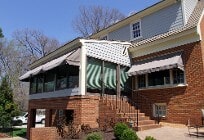
Thinking about adding an awning to your house, but not sure where to start? Whether you’ve been searching for “awnings installation,” “power awning for house,” or “wood awning attached to house,” Roberts Awnings is the local team that turns ideas into shade.
For more than a century, our family-run shop has designed, fabricated, and installed house awnings across Chesterfield, Richmond, and all of Central Virginia. Because we build and install everything in-house, you’re working with the same craftsmen who understand how an awning should look, drain, and handle wind on your specific home.
From motorized retractable awnings over a backyard patio to a simple wood-framed awning on a side entry, we engineer each project for Virginia’s wind loads, your siding type, and HOA or historic rules.
Ready to talk through options? Contact Roberts Awnings to start planning your residential awning installation.
Installation Expertise for Long-Lasting Awnings on Your House
If you found us by searching “awnings installation,” “awning on house,” or “power awning for house,” you’ve probably noticed most sites talk about fabric colors and motors but skip how the awning actually ties into your home.
Here’s how we approach adding an awning to a house so it looks right and holds up in Central Virginia weather.
Structural Mounting
First, we map out how your awning will attach to the house. That means finding framing then sizing brackets, backing plates, and fasteners for your specific wall type. We aim for clean lines that match trim and soffits, but never at the expense of anchoring. The result is an awning on your house that feels integrated with the architecture and is built to handle local wind gusts.
Power Awnings for Houses Wired Correctly
Motorized units are popular, but a power awning for a house is more than plugging in a kit. We coordinate with your existing circuits or electrician, set wind and motion sensors, and test everything under load before we leave. You get push-button shade that’s quiet, smooth, and ready for the next summer storm.
Wood Awnings Attached to the House
If you prefer a more traditional look, we can design a wood awning attached to the house that matches your trim profiles and roof pitch. We design ledger details, flashing, and posts to work with your siding and windows. We pay special attention to water management at the connection point. From stain-ready lumber to powder-coated metal accents, we build wood-framed awnings to look original to the home.
Guidance on Codes, HOAs, and Future Upgrades
Any time you’re adding an awning to a house, there are rules and future plans to think through. We walk you through those considerations, recommend projections and heights that work with furniture and doors, and design today’s awning so it can support tomorrow’s upgrades.
Residential Awning Installation: How the Process Works
When you call Roberts Awnings after searching “adding an awning to a house” or “awning on house,” you’re getting a structured and proven process.
Site Visit, Photos, and Structural Check
When we get to your house, our team:
- Walks the area you want shaded
- Takes measurements of wall height, projection, and clearances for doors, windows, and lights.
- Locates the structure behind siding or brick so we know exactly where a ledger or brackets can safely tie in.
If we see issues like rotted fascia, undersized trim, or a cramped mounting zone under the soffit, we flag them and talk through ways to solve them before installation day.
Matching the Right Option to Your House
Next, we match the awning to how you actually use the space and how your home is built. Depending on exposure and style, we may recommend:
- A motorized power awning for the house with wind sensor.
- A fixed wood awning attached to the house.
- A slim retractable awning for a narrow patio.
We’ll talk through fabric options, frame finishes, projections, and pitch so you see how the awning will look before anything is ordered.
Permits, HOA Approvals, and Electrical Planning
Many homes in Central Virginia sit in neighborhoods where permits, setbacks, and HOA rules matter. Before we schedule awnings installation, we can:
- Provide drawings and spec details for HOA architectural review.
- Advise on when a building permit is needed.
- Coordinate electrical for a power awning for your house.
Fabrication & Prep in Our Shop
Once the plan is approved, we build your awning in-house. Frames are cut, welded, and finished in our shop and fabrics are sewn and tensioned on the same floor. While that work happens, we also:
- Pre-stage brackets, backing plates, and fasteners for your specific wall type.
- Pre-wire motors and test drive units
Professional Awning Installation on Your House
On installation day, our employee crew:
- Opens siding or locates mortar joints exactly where mounts were planned.
- Anchors brackets or ledgers into structure with the correct backing plates.
- Sets pitch and projection so water drains away from the house.
If you’re getting a wood awning attached to the house, we also flash the connection so you gain shade without inviting future leaks or rot.
Testing, Clean-Up, and Homeowner Walk-Through
Before we leave, we:
- Run the awning through multiple open/close cycles and test motor, switch, and remote if it’s powered.
- Confirm runoff, arm clearance, and fabric tracking look right from inside and outside.
- Clean up any packaging, fastener cutoffs, or dust.
Then, we walk you through operation, show you how to retract the awning before storms, and outline simple care habits that will keep your new awning looking sharp for years.
If you’ve been looking for “awnings installation” and wondering what actually happens from first visit to final bolt, this is the kind of end-to-end process you can expect from Roberts Awnings.
—–
Residential Awning Installation Solutions for Every Home
No two homes in Central Virginia are the same. That’s why “adding an awning to a house” should never be a one-size-fits-all box from the internet. When you call Roberts Awnings for awnings installation, we design only after seeing your home and understanding your needs.
Power Awning for the House
If you’ve got a south- or west-facing deck that bakes by noon, a motorized power awning for the house is usually the best move. Add a wind sensor, and your power awning can auto-retract when gusts hit.
Wood Awnings Attached to the House
For front porches, side doors, and mudroom entries, a wood awning attached to the house can be the right call when you want year-round shelter. This is a smart option when you want the feel of a small porch roof without taking on a full addition.
Compact Awnings on the House
Not every project is a big deck. Maybe you just want:
- A small awning on the house to protect a back door and keep rain off the threshold.
- A series of window awnings to cut glare and reduce heat gain in a sunny room.
- A compact fabric unit over a tight patio where there’s limited mounting height.
From Pop-Up Tents to Permanent Shade
A lot of homeowners call us after a few seasons of wrestling with pop-up tents or temporary shades. They’re tired of:
- Taking everything down every time there is wind.
- Rusty frames and covers that stain after one summer.
- Layouts that don’t match how the family actually uses the space.
If you’re comparing options for awnings installation and trying to decide what belongs on your house, our team can walk you through the choices.
Residential Awning Installation in Chesterfield, Richmond & Central Virginia
Roberts Awnings is the team homeowners call when they search for “awnings installation” or “adding an awning to a house” and want more than a box from the internet.
Where you’ll see our residential awning installation trucks:
- Chesterfield, VA
- Richmond, VA
- Colonial Heights, VA
- Petersburg, VA
- Hopewell, VA
- Prince George
- Fort Gregg-Adams
- Dinwiddie, VA
- Mechanicsville, VA
- Ashland, VA
If you’re ready to add an awning to your house, schedule a residential awning installation consultation and let our local team design a solution.
Residential Awning Installation FAQs
How do I choose the right awning installation for my house in Central Virginia?
Start by thinking about how you actually use the space, not just how you want it to look. Do you host cookouts on a west-facing deck that bakes in the afternoon? Need a dry spot where kids can kick off muddy shoes at the back door? Or are you mostly trying to cut heat coming through big patio doors?
From there, we look at three things with you on-site:
- Sun and weather exposure – Which direction does that wall face, how hard does the wind hit it, and does rain tend to blow sideways?
- Structure and siding – Brick, Hardie, vinyl, or wood all get different attachment methods so the awning is solid without creating leak points.
- Lifestyle and maintenance – If you like “set it and forget it,” a fixed fabric or metal unit may be best. If you want flexibility, a retractable or power awning for the house usually wins.
When you book an awnings installation consultation, we walk your property with you, talk through a few options, and sketch where the awning would start, end, and drain.
Do I need a permit for adding an awning to a house in Chesterfield or Richmond?
In most cases, yes. If your new awning is permanently attached to the house and projects several feet, local building departments will treat it like a small structure. That usually means a permit, basic wind-load compliance, and sometimes zoning checks.
For typical residential projects, permits are most often required when:
- The awning projection is more than a few feet off the wall
- Posts, footings, or a wood awning attached to the house tie into the ground
- The awning is part of a deck, porch, or patio cover that changes drainage or egress
Homeowners usually don’t want to get lost in that paperwork—and honestly, you shouldn’t have to. When we handle awning installation in Central Virginia, Roberts Awnings takes care of the permit process for you. We provide the drawings, confirm wind-load requirements, coordinate inspections, and make sure the finished awning is something both you and your building inspector feel good about.
Is a power awning for my house really worth it?
If you only use your awning a couple of times a season, a manual unit can be fine. But for most families in our climate, a power awning for the house pays off in comfort and longevity.
Here’s why: when it’s effortless to use, people actually use it. You’re more likely to extend it on hot afternoons (which cuts heat gain inside) and retract it when storms roll in (which protects the frame and fabric). Motorized units also pair well with wind sensors and home-friendly controls.
From a lifespan standpoint, a powered system puts less strain on arms and hardware than a crank that gets forced when someone’s in a hurry. During our consultation, we’ll go over both options, show you the cost difference, and be honest about whether a motorized setup makes sense.
Can you safely attach a wood awning to my house without causing leaks or damage?
Yes. But it has to be done the right way. A wood awning attached to the house needs structural support and a weather-tight connection to your existing siding and roof.
Ready to Add an Awning to Your House?
If you’ve been comparing awnings installation options because your deck is too hot, your back door is always soaked, or you just want a real outdoor room, it’s time to talk to a team that actually designs and builds awnings every day. Roberts Awnings handles every step in-house.
Contact Roberts Awnings today to schedule your residential awning installation consultation.



 Bill F.